




your cart
Your cart is empty.


Holy Basil Vs Thai Basil: What's the Difference
Thai basil & holy basil are both popular fragrant herbs used in Southeast Asian cooking. Find out how they differ & how best to use them.
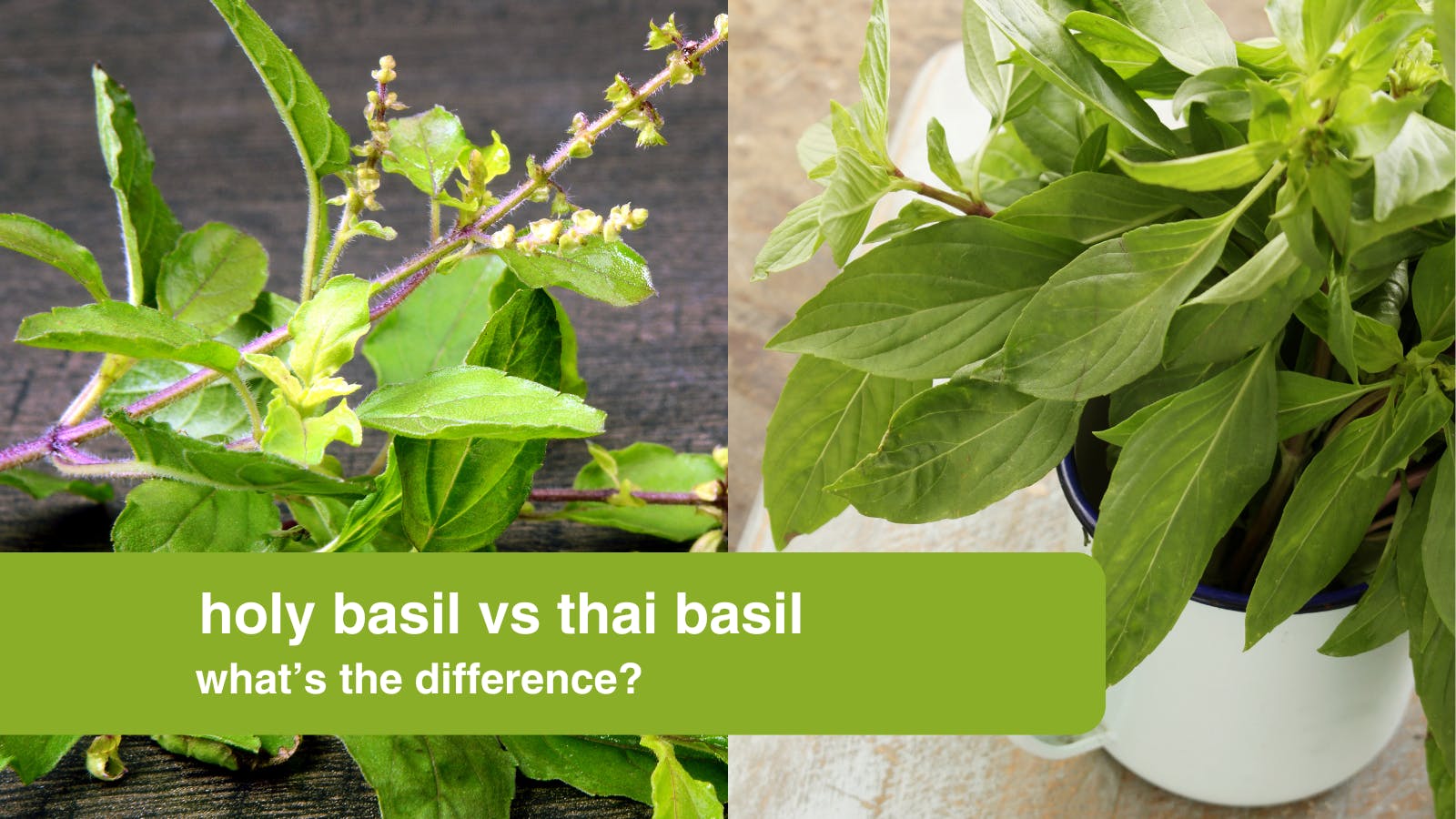
Basil is a familiar herb that many of us will use to add hints of fragrance and fresh flavour to everyday dishes. However, there’s more than just one type of this powerful herb.
It comes in all kinds of shapes, varieties and flavours, with some figures estimating there are as many as 150 different types of basil. Two of the most common basil species used in Southeast Asian cooking include holy basil and Thai basil. But how do they differ and how should you use them?
What is Thai Basil?
Thai basil, or Ocimum basilicum var. thyrsiflora, is a key herb in Thai and Vietnamese cuisine. It has a fragrant, slightly spicy, sweet flavour which many liken to anise and liquorice. Its vibrant freshness makes it a popular addition to soups, curries, stir-fries and more.
Is Thai Basil the Same as Basil?
While both come from the Ocimum basilicum species, Thai basil is not the same as sweet basil, which is the other kind you will likely find in UK supermarkets and is frequently used in Italian cuisine.
If a recipe simply calls for ‘basil’, it is probably referring to Italian sweet basil and will state Thai basil specifically if that is required instead.
What is Holy Basil?
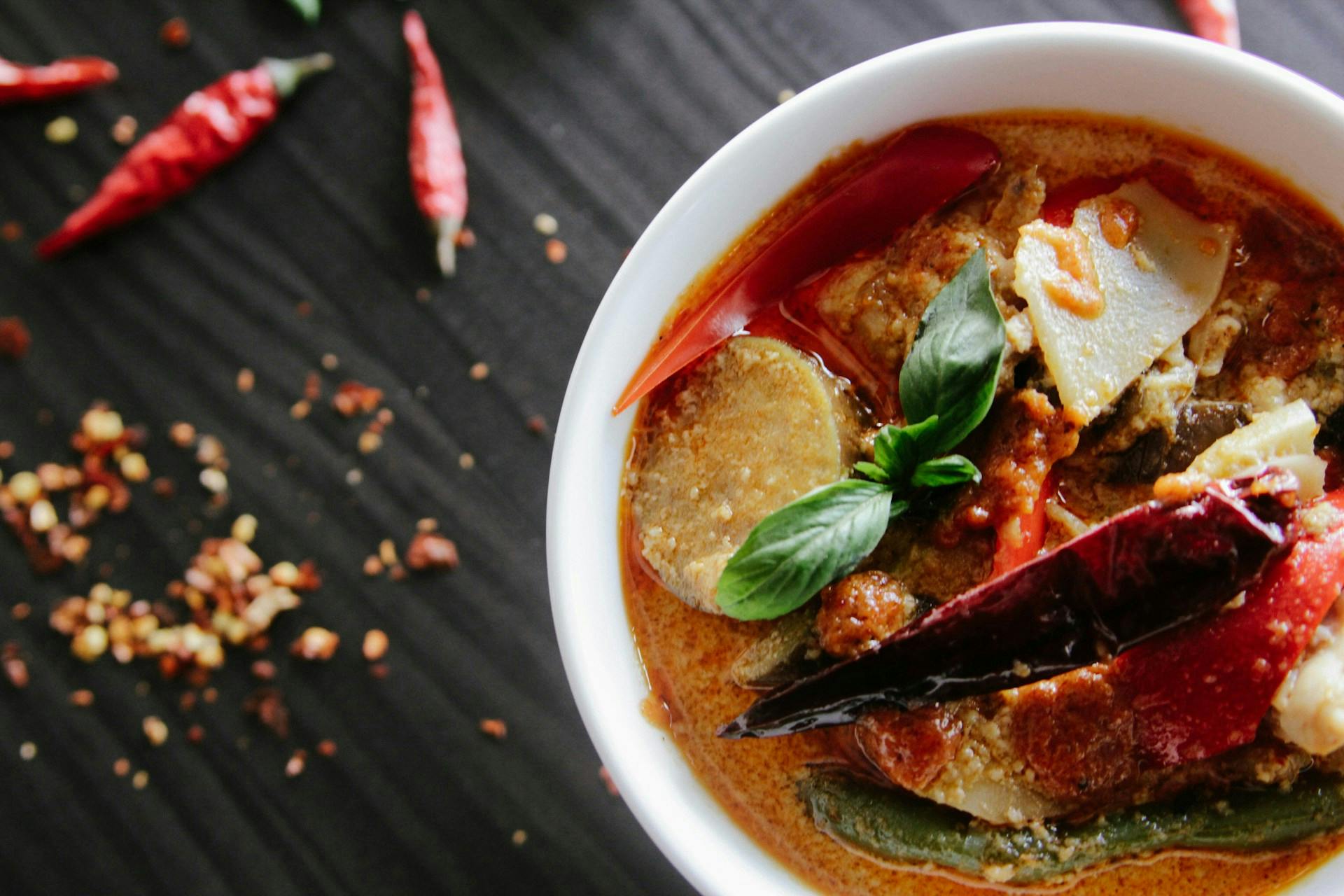
Holy basil, or Ocimum tenuiflorum, is originally from India and is considered a holy plant in Hindi tradition (hence the name) as well as playing a role in Ayurvedic medicine. It has a spicier, more peppery, clove-like taste than Thai basil, making it another popular choice for spicy Thai dishes like pad kra pao.
Because of its medicinal properties, holy basil, also known as tulsi, is also often incorporated into teas.
Can You Cook With Holy Basil?
While some may be more familiar with holy basil as a medicinal and wellness supplement, it is also frequently used in different dishes to enhance the flavour and fragrance, like sweet and Thai basil is.
Differences Between Thai Basil & Holy Basil
Let’s break down the differences between the two herbs a little more.
Flavour
- Thai Basil: Sweet with anise and liquorice undertones.
- Holy Basil: Spicy, with hot, peppery and clove-like undertones.
Appearance
- Thai Basil: Medium, green spear-shaped leaves with distinct purple stems and pink/purple flowers.
- Holy Basil: Oval leaves with a serrated edge and a rougher texture.
Both types of basil yield small perennial plants, although holy basil plants typically grow a few inches taller than Thai basil.
Usage
- Thai Basil: Common ingredient in red, green and panang curries, pho, spring rolls and stir-fry dishes. It can be stirred in while cooking or added as a fresh garnish.
- Holy Basil: Popular in spicy stir-fries like Pad Kra Pao as well as used in medicinal teas or tinctures to help manage stress, decrease inflammation and support brain, immune and respiratory health.

Can You Substitute Holy Basil With Thai Basil?
As the above differences highlight, Thai and holy basil are not interchangeable. However, in a pinch, you could substitute one for the other. Thai basil is often easier to get hold of in the UK, so it might be your best bet if you can’t find holy basil for a recipe.
Note that the flavour profile of the final dish will be different – each type of basil will add its own kind of punch.
Want to enjoy more authentic Thai flavours at home. Our Thai online supermarket stocks all the best foods and ingredients to make your favourite dishes!
this site uses cookies
We and our advertising partners use cookies on this site and around the web to improve your website experience and provide you with personalised advertising from this site and other advertisers. By clicking allow, you accept the placement and use of these cookies for these purposes. Learn More