




your cart
Your cart is empty.


Know The Ingredient
What is Sweet and Sour Sauce?
Sweet and sour sauce has been hugely popularised by Western takes on Chinese food. Discover its origins and how to use it in your cooking.
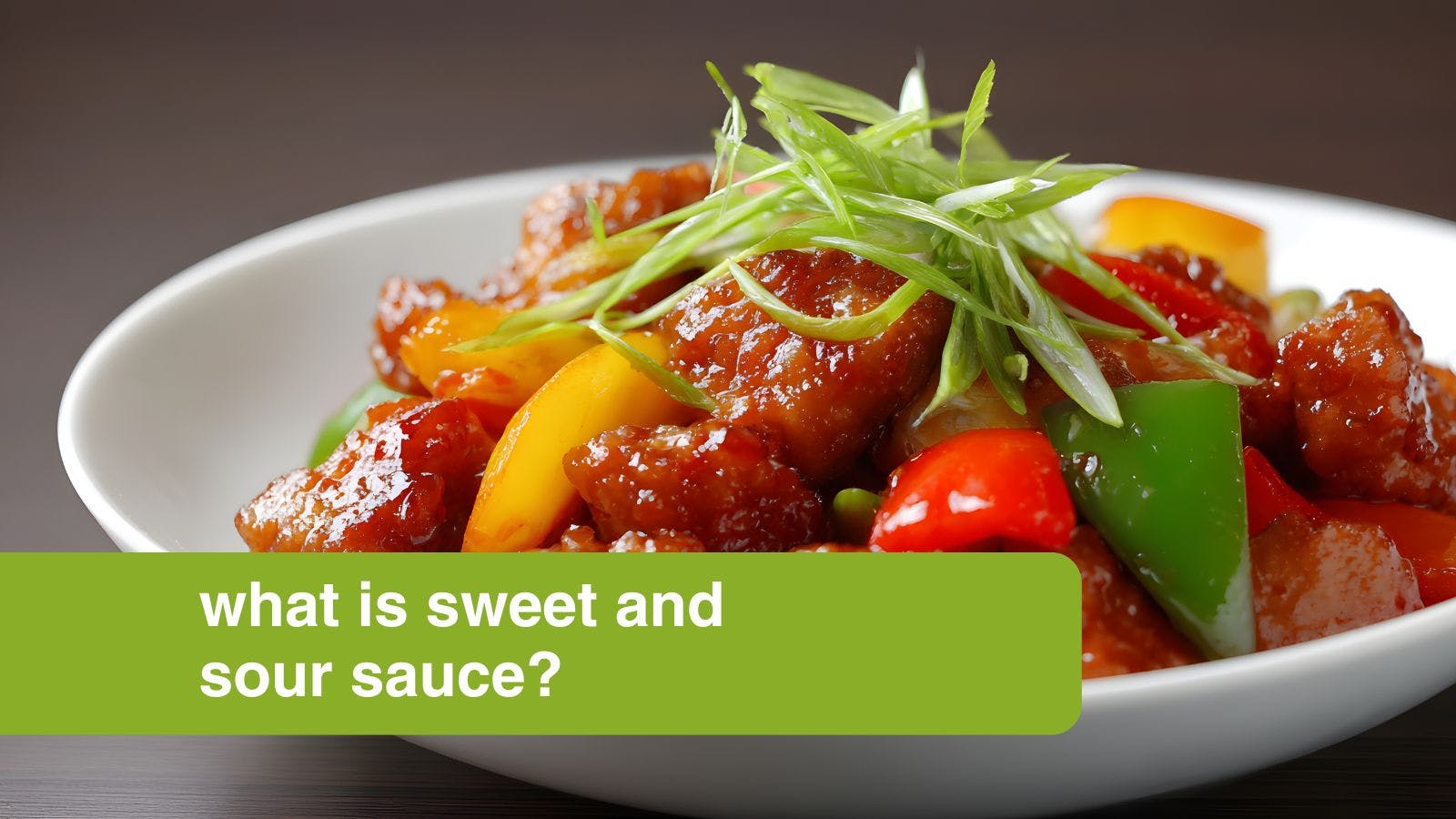
One of Asian cuisine’s most notable exports, sweet and sour sauce has been a part of British and American life for generations. Its iconic tangy sweetness is now an exciting part of many families’ weeks, and bottles of the stuff are very popular at Chinese supermarkets across the UK.
The story behind sweet and sour is arguably as vibrant and varied as the sauce itself. It’s a story of how Chinese people and culture have moved around the globe, adapting to local tastes while also picking up techniques and styles to bring back home.
What is Authentic Sweet and Sour Sauce?
Many of us know sweet and sour sauce as a tangy, orange-coloured sauce. It is very versatile and can be used in myriad ways, but is most commonly poured over cooked meats and vegetables, or served alongside as a dipping sauce.
Sweet and sour sauce is one of the most widely enjoyed condiments in the UK, predominantly with Chinese food. So, what is in this delicious condiment that has got us hooked?
Part of sweet and sour’s story is the incredible amount of varieties the sauce has – how it is made in different parts of the world can vary significantly. Modern versions can include different types of vinegars, sugars and fruits alongside ketchup, soy sauce, onions, and more.
The Origins of Sweet and Sour: Chinese, Cantonese, American & British
While sweet and sour as we know it is a Chinese creation, it has been greatly influenced by the West, where it became hugely popular.
It is believed that sweet and sour can be traced back to the first century in China, when ribs would be cooked in sugar and vinegar. From there, it spread across the country, including to the southern Cantonese region.
The sweet and sour that is now popular in the UK is derived from Cantonese cuisine, particularly Hong Kong, once part of the British Empire and a melting pot of global influences. Here, the addition of ingredients like plum and hawthorne gave the sauce its distinct red colour.
Sweet and sour was particularly popular with lower-income families in China, where the base ingredients of sugar and vinegar were easily accessible and could give flavour to any meal. When these demographics emigrated west, often in search of work, they sought to recreate the taste of home as much as they could.
Without traditional ingredients, new recipes started to emerge; western sweet and sour often used ketchup as a base, while things like apple cider vinegar were employed to add the tangy finish. Many of these Western ingredients can now be found in sweet and sour dishes served in Hong Kong.
Popular Asian Dishes Using Sweet and Sour Sauce
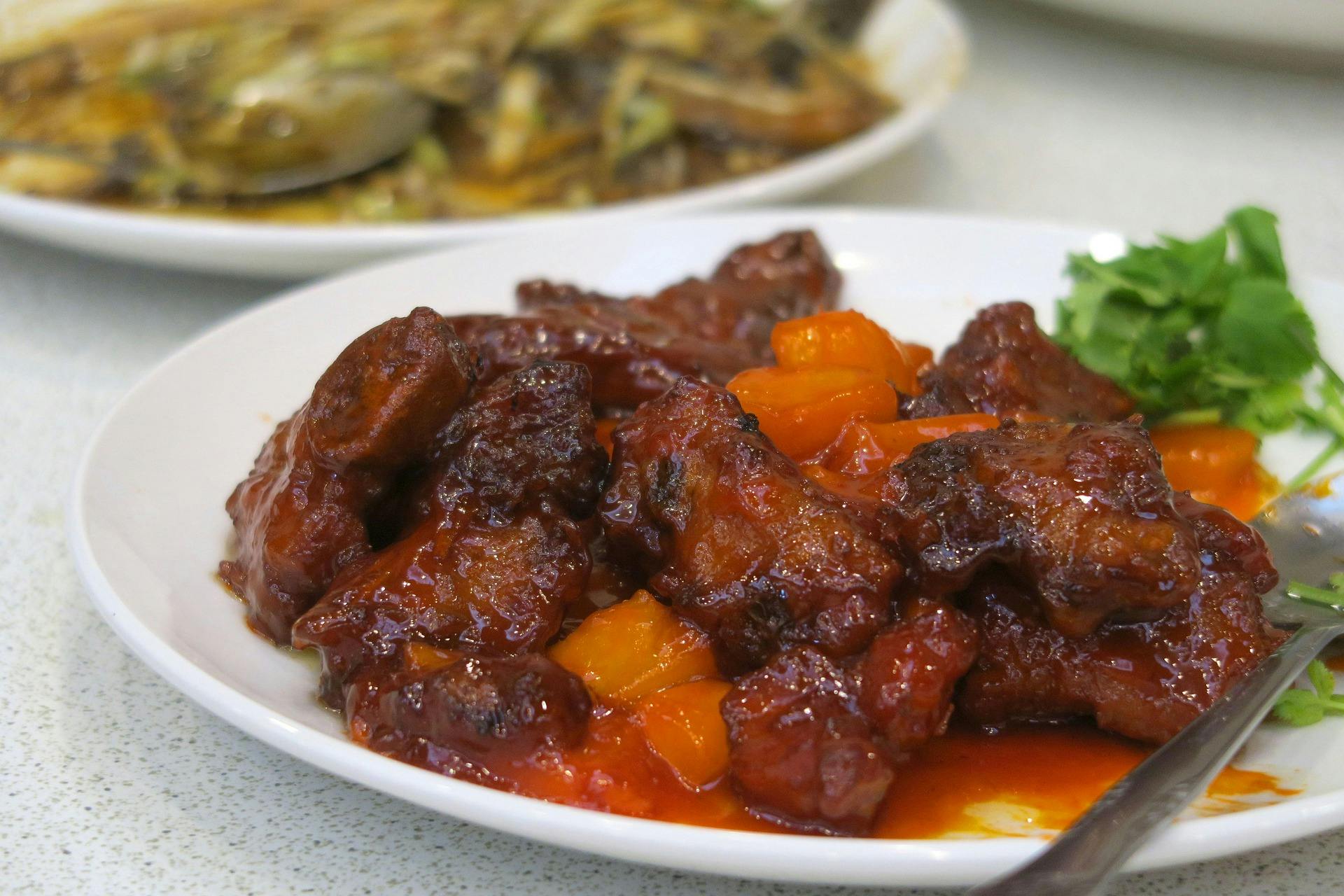
Sweet and sour sauce is incredibly versatile. It can be used as a marinade during cooking, poured over cooked food and enjoyed warm, or kept on the side as a dipping sauce. There’s no end to the possible options, although here are some classics you may want to try:
- Sweet and Sour Pork – The origin of the sauce; traditionally cooked and served with ribs, it is now more common to see it poured over fried pork shoulder and vegetables.
- Sweet and Sour Chicken – A very popular dipping sauce alongside breaded chicken.
- Sweet and Sour Fish – Similar to pork, sweet and sour is often added to the end of cooking fried fish dishes, giving them a lovely tangy coating.
How to Make Sweet and Sour Sauce at Home
Sweet and sour sauce has its origins in creatively mixing ingredients, so it’s quite easy to make an authentic sauce at home!
Really simple versions of sweet and sour can be made by mixing just four staple ingredients: brown sugar, ketchup, white vinegar and soy sauce. However, you can also expand on the ingredients to create a sauce with more depth.
For a more authentic sweet and sour sauce, you could mix the following ingredients:
- Water
- Cornstarch
- Cider vinegar
- Brown sugar
- Ketchup
- Soy sauce
- Pineapple
If you’re in a hurry, some recipes say you could add all of your sauce ingredients to the saucepan, stir and wait for it to reduce. However, if you have a little more time, for the best saucy outcome, you should add each ingredient one at a time.
Cornstarch never works as well when added straight to hot water and could leave a mess. We’d suggest mixing your cornstarch with cold water to form a paste before adding it to the hot saucepan to make sure everything blends more evenly, then continue to add in each ingredient and mix.
If you want a chunky sauce, then you can always add some green peppers for a crunch, not forgetting pineapple chunks for extra texture and the fruity taste that makes us love sweet and sour so much. Then, just add additional sugar or vinegar to get the final balance of sweet and tangy just right.
This sauce takes a bit of care and balance, and you’ll likely want to personalise it to taste. However, once perfected, this dream sauce will become something that sticks with you forever, just as it did for those who first brought it to the West.
this site uses cookies
We and our advertising partners use cookies on this site and around the web to improve your website experience and provide you with personalised advertising from this site and other advertisers. By clicking allow, you accept the placement and use of these cookies for these purposes. Learn More