




your cart
Your cart is empty.


General Articles
What is Obon Festival in Japan?
Learn all about the traditional Japanese Obon festival that celebrates and honours one's ancestors.
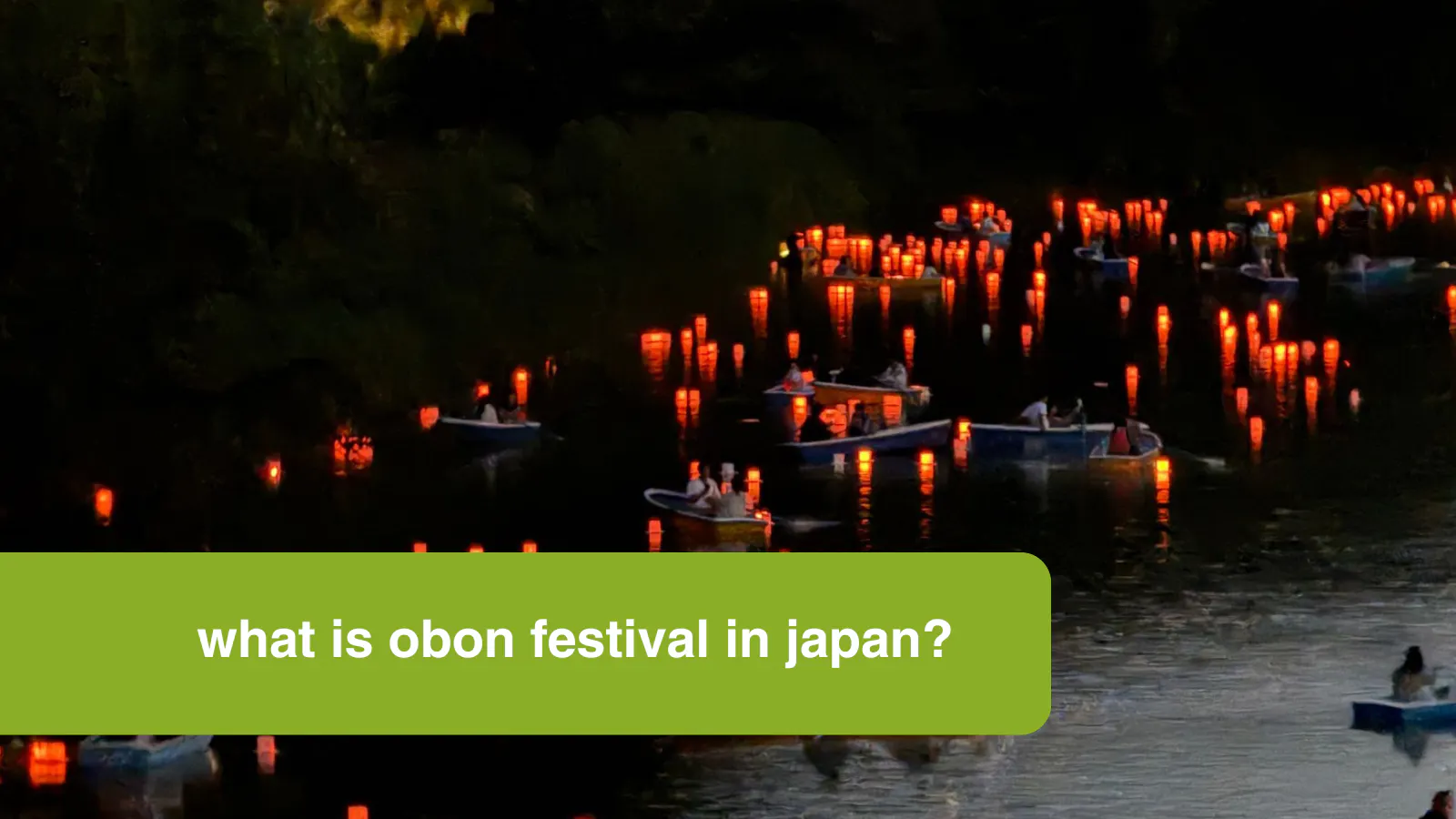
Obon is a Japanese summer festival rich with traditions and history. It is a period of remembrance and celebration that encourages families and communities to come together!
Find out more about the holiday’s origins, how it’s celebrated and the tasty festival food that’s enjoyed during the period!
What is Obon?
Obon is a traditional Japanese Buddhist festival for honouring ancestors and commemorating loved ones who have passed away. It is a time of remembrance, community and celebration with various traditions, including lantern lighting, Bon Odori dancing and grave cleaning.
Is Obon a National Holiday in Japan?
Obon is not an official holiday, but many workplaces and schools may close or allow leave so people can travel to their hometowns and celebrate with family.
When is Obon Festival?
The festival is traditionally celebrated on the 15th day of the 7th month, using the lunar calendar. Because of the different calendars used, some regions celebrate in July, but it's more common to celebrate in mid-August.
In 2026, Obon will most widely be celebrated from August 13th to August 16th.
The traditional festival period lasts 3 days, but it’s not unusual for people to treat the whole week around this period as a holiday time.
Why is Obon Celebrated?
The origins of the festival come from the story of Maha Maudgalyayana, also known as Mokuren. As a disciple of Buddha, Mokuren used his powers to check up on the spirit of his mother, who had passed away. To his dismay, he discovered that his mother was suffering in the Realm of Hungry Ghosts.
After turning to Buddha, Mokuren was advised to make offerings to Buddhist monks. On the 15th day of the 7th month, he did just that, allowing his mother to be released from the distressing realm. In celebration, he danced with joy, which is said to have inspired the continued tradition of Bon Odori dancing.
Over the centuries, this story blended with Shinto traditions (Japan’s indigenous religion) of respecting one’s ancestors, eventually creating the uniquely Japanese festival of Obon.
While Obon is a time of remembrance and reflection, it is not necessarily about mourning. Instead, it is a time to celebrate family ties and the everlasting connection between generations, keeping past relationships alive.
How is Obon Celebrated?
There are many time-honoured traditions that make this festival so special.
Ohaka Mairi (Grave Cleaning)
In the run-up to the festival, it is customary to visit family graves to clean them, tidy the surrounding grounds and pay respects. At home, many people may also decorate a family altar with flowers and offerings to not only honour loved ones but bring a bit of seasonal festivity to the space.
Shōryō-uma (Spirit Horses)
One especially important offering or decoration is the shōryō-uma or ‘spirit horse’. These are made from cucumbers or aubergines pierced with four cocktail sticks as legs to represent horses or cows. The cucumber horse is meant to help ancestors’ souls quickly travel back to our world to reconvene with family, and the aubergine cow helps them leisurely return to the spirit world.
The vegetable figurines are displayed on family altars or near entryways to help ancestors travel more comfortably when visiting their relatives.
Mukaebi (Welcome Fire)
On the first day of the festival (August 13th in most parts of Japan), those who celebrate will welcome their ancestors with fire and lantern light. The mukaebi welcome fire will be lit in the evening of the 13th to guide spirits back to their ancestral homes. Traditionally, dried hemp stalks called ogara are burnt in earthen plates called houroku. The small fires may be lit in doorways or gates to welcome in spirits.
Bon Odori (Bon Dance)
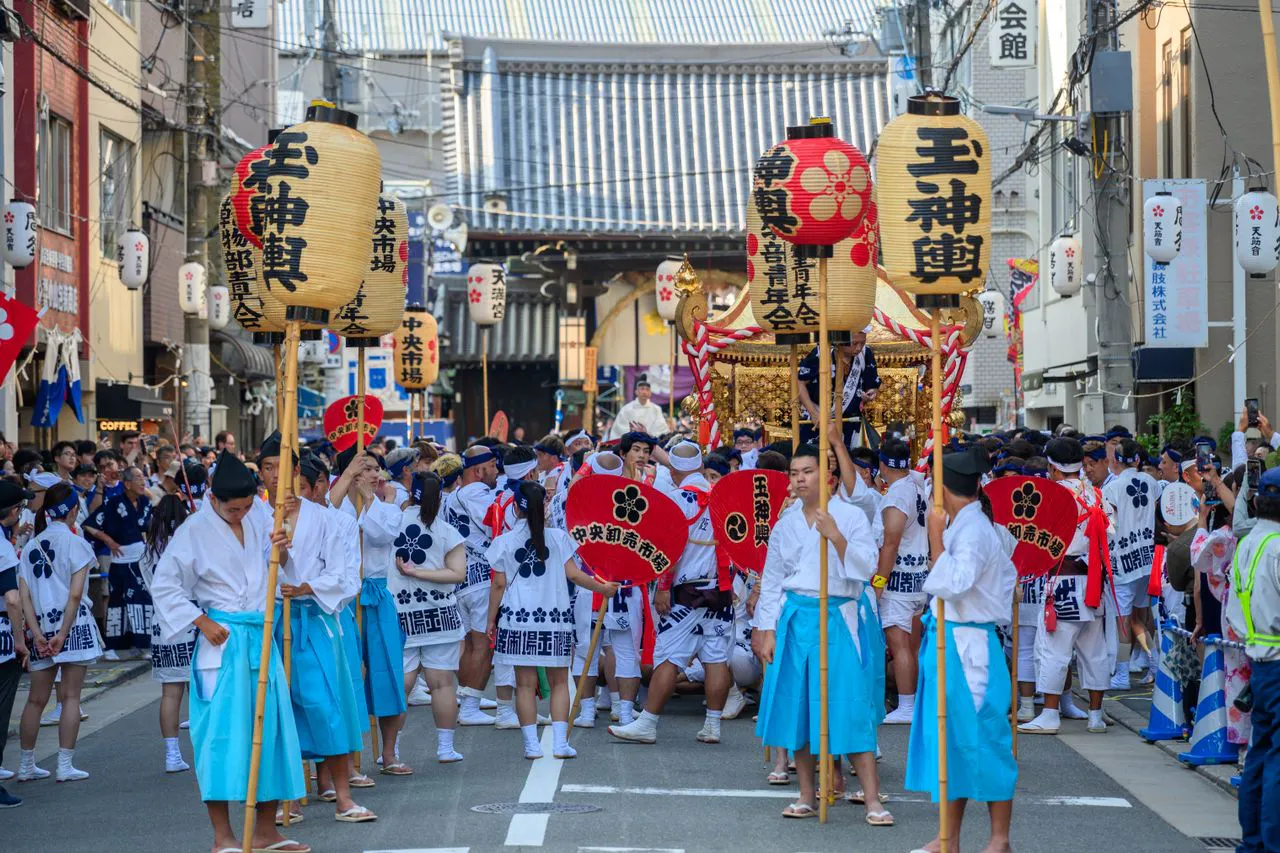
Bon Odori is a traditional dance event held in parks, shrine grounds and public spaces during the Obon festival. Dancers will traditionally wear a yukata (lightweight summer kimono) and dance to folk and modern songs. While different regions will have different dance styles and preferred songs, an often common part of the dance is to move in a circle around a central wooden platform known as the yagura.
The dances are generally joyful and expressive, providing another lively way to welcome spirits and celebrate life while also offering community-based entertainment during the summer.
Toro Nagashi (Floating Lanterns)
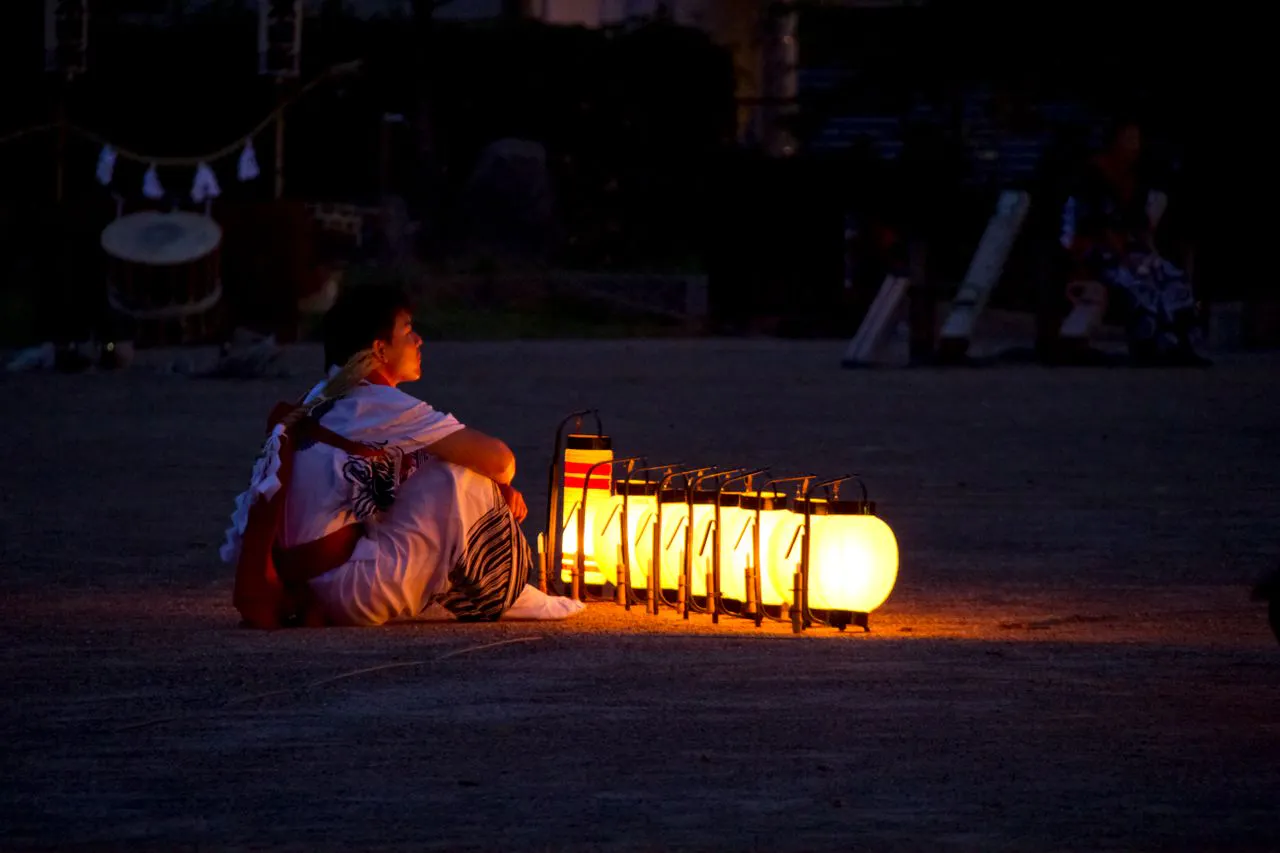
Lanterns are also used to guide the spirits’ path back to their families. They may accompany the welcome fire, be hung outside homes or taken to family graves.
Toro nagashi is an especially spectacular lantern-based ceremony occurring on the final evening of Obon, where paper chochin lanterns are sent floating down a river. This can be both a form of remembrance for lost loved ones, with many writing messages and prayers on the lanterns, as well as a symbol of the return of souls to the spirit realm after their visit during the festival.
Okuribi (Send-Off Fire)
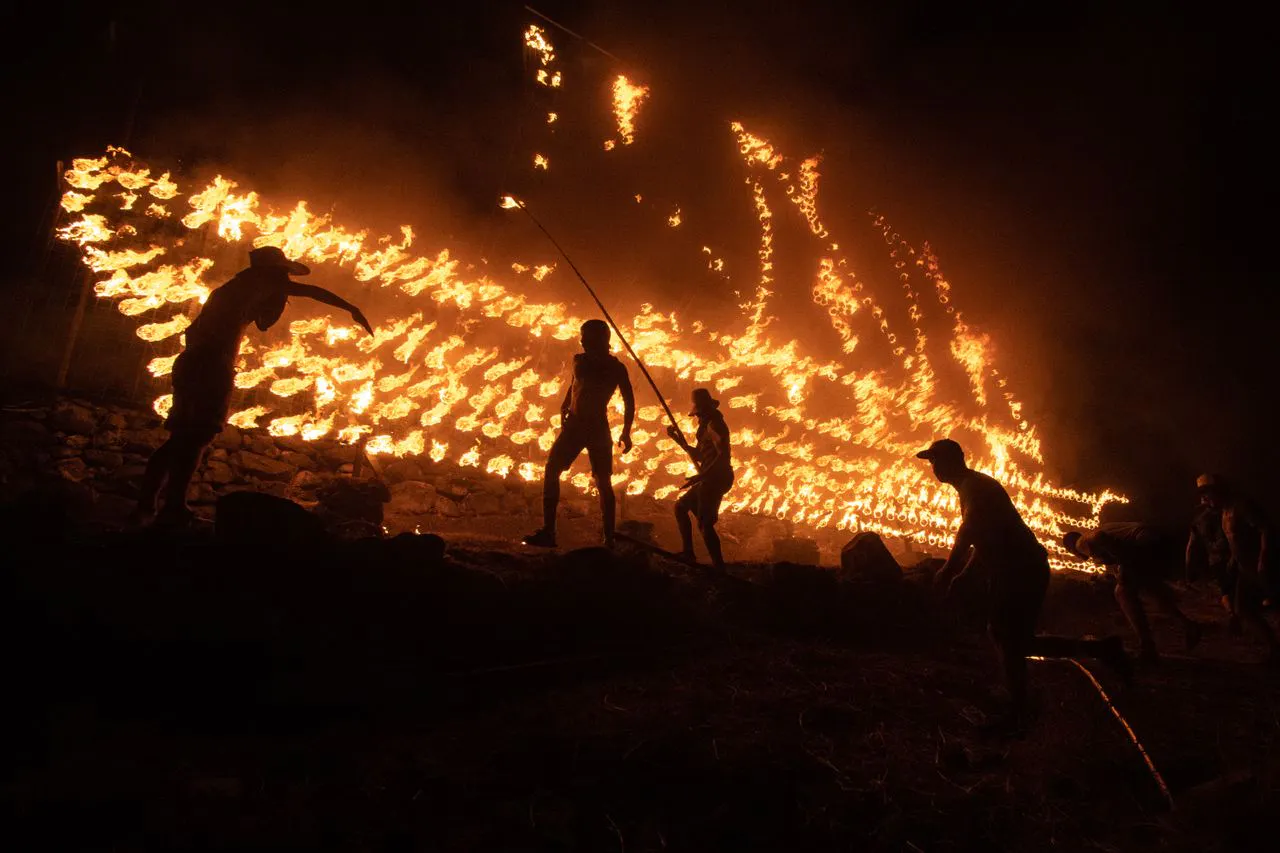
Along with the lantern displays on the final day of Obon, bonfires are also lit to guide spirits back to the other side and send them off safely.
One of the most well-known and impressive displays takes place in Kyoto, where fires in the shape of five different Japanese characters are set on the sides of the mountains that surround the city. Two of the blazing characters are for ‘big’ or ‘great’, one is for ‘wonderful dharma’ (the profound teachings of Buddha), one is for ‘ship’, and the last is for ‘shrine gate’.
Obon Festival Food
As with other festivals, food becomes an important part of the celebrations, especially in areas that celebrate with carnivals, parades and community gatherings.
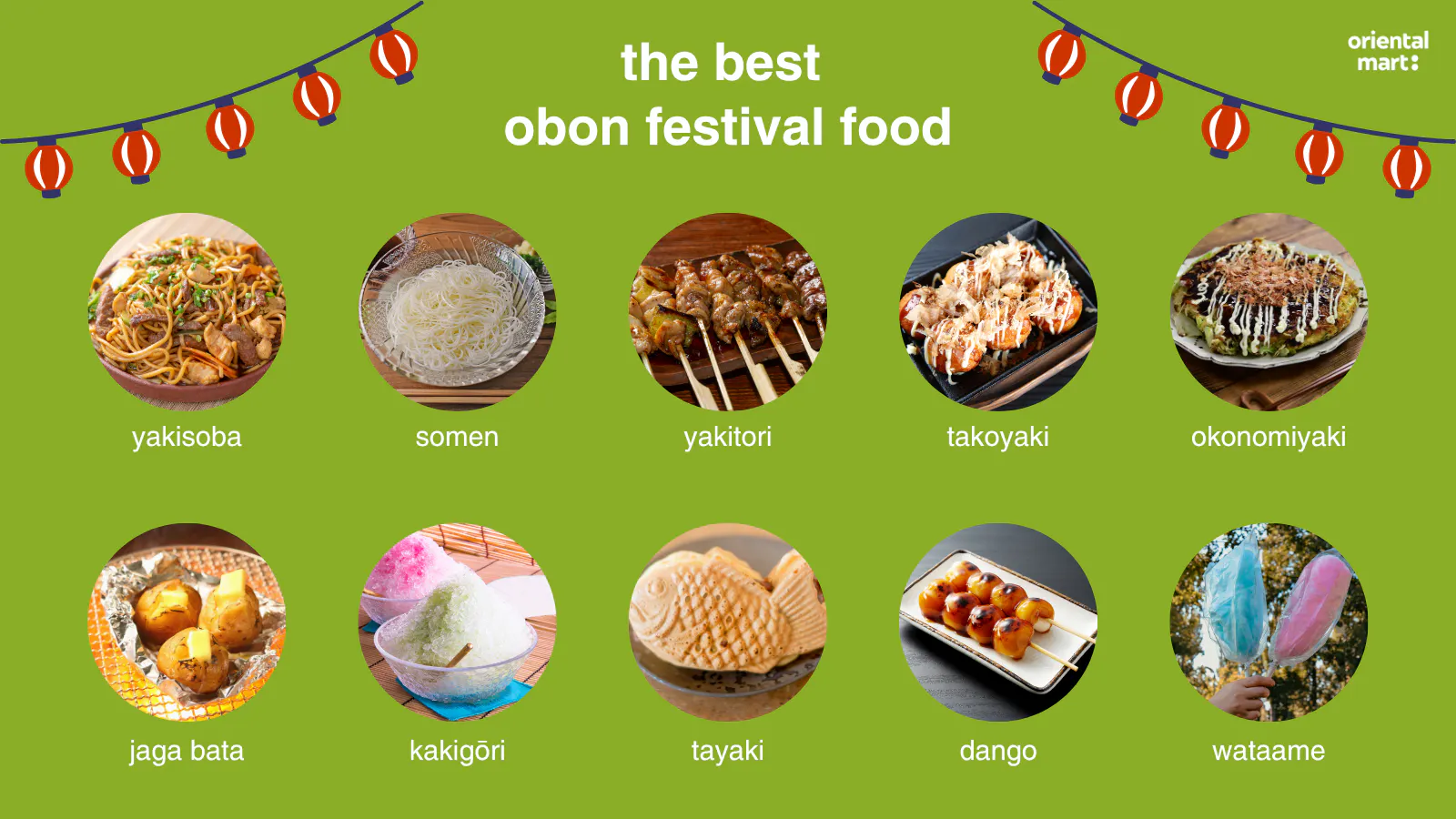
Popular Japanese summer festival foods include:
- Yakisoba: Popular street food dish consisting of stir-fried noodles served with meat, veggies and a sweet and savoury sauce.
- Somen: Chilled noodle dish made from thin wheat somen noodles served with a light soy dipping sauce.
- Yakitori: Seasoned chicken skewers (any kind of skewered and grilled dish is more generally known as kushiyaki).
- Takoyaki: Grilled octopus balls filled with minced octopus, tempura scraps, pickled ginger and spring onion and topped with bonito flakes, takoyaki sauce and mayo.
- Okonomiyaki: Savoury pancakes with additions like shredded cabbage, meat and seafood with a drizzle of sweet-savoury okonomiyaki sauce and Kewpie mayo.
- Jaga bata: Fresh baked potatoes drenched in butter.
- Kakigōri: Shaved ice flavoured with different syrups and often condensed milk.
- Taiyaki: Fish-shaped cakes made from waffle-like batter and often filled with sweet fillings such as red bean, custard or chocolate.
- Dango: Sweet mochi-like dumplings made from glutinous rice flour presented on a skewer.
- Wataame: Japanese candy floss.
Whether you’re celebrating Obon this year or just want to experience some tasty Japanese summer festival treats, we’ve got you covered. Browse our online Japanese supermarket to discover authentic ingredients and snacks, ideal for creating culinary masterpieces and sharing with friends!
this site uses cookies
We and our advertising partners use cookies on this site and around the web to improve your website experience and provide you with personalised advertising from this site and other advertisers. By clicking allow, you accept the placement and use of these cookies for these purposes. Learn More